
We just spent January-March in Salt Lake City. While there, we skied a lot, hiked some, and generally familiarized ourselves with the city. Here’s a list of things we found particularly useful.
1. An insulated jacket
One of the first items I bought in anticipation of this trip was a good daily jacket. While I’d often use a ski jacket as a winter coat, I realized I probably needed something more packable and versatile for daily use in Salt Lake City.
I ordered a few options from Backcountry, and ended up keeping an Outdoor Research SuperStrand LT jacket in black. It’s very lightweight, it packs down well, and it has kept me warm even in some pretty cold temperatures. It kept me dry when I took it to a conference in Washington D.C. where it rained all week, and it looked nice enough that I felt comfortable wearing it to formal work events.
I’m allergic to down, so I opted for a synthetic down option, which really limited the choices. It took quite a bit of digging to find this option, but I’m very happy with this jacket for its warmth, appearance, and versatility.

2. All the flannel
I didn’t bring a lot of hoodies or sweatshirts on this trip because I was trying to be at least a bit more mindful about space (we did have to fit all of this into the car, after all), but I did bring a lot of flannel shirts. I’ve always loved flannel; I used to wear flannel shirts to work pretty often (which prompted a coworker to coin the term “Flannel Fridays” for my typical Friday attire).

These shirts are reasonably priced, warm, soft, and hold up well to repeated washing. I lived in them this winter, and they have been great.

3. A lightweight neck gaiter
We both have a couple of options for neck gaiters while skiing. I even have a full-blown fleece hood that fits over my helmet for those particularly chilly days. However, I did end up getting yet another neck gaiter for hiking. I opted for merino wool because, well, I’m obsessed with merino and own an awful lot of it. I chose a lightweight option because this was a pretty warm winter; I didn’t need much protection from the elements, but I did need something to protect my neck from the cold that I could pull up over my nose and mouth if needed.
Bonus feature: I did a couple of very warm spring skiing days, and this was great for that too! My regular neck gaiter would have been way too warm, but this kept the wind and sun off my neck perfectly.

4. A merino pullover
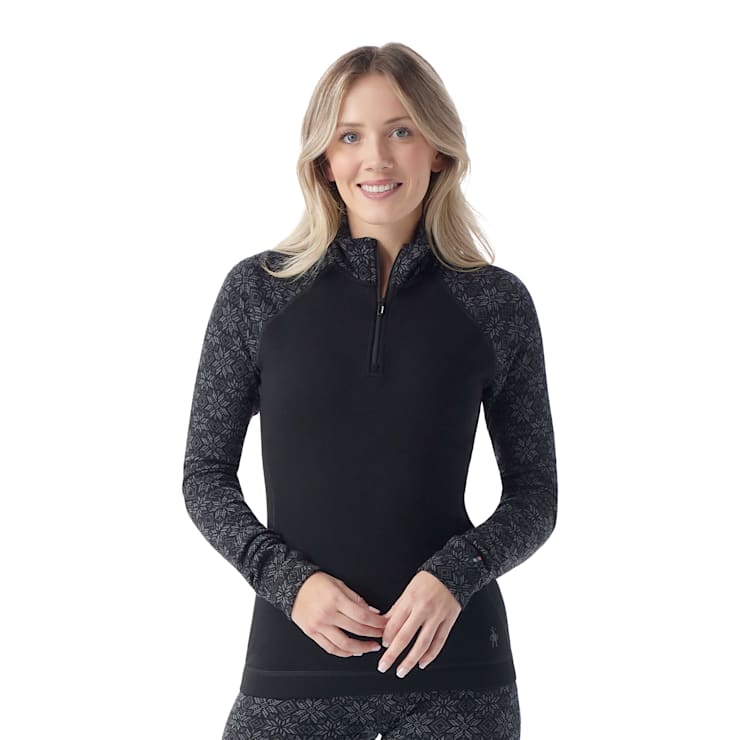
As I just mentioned, I’m kind of obsessed with merino wool. Most of my base layers are made of merino. Towards the end of last season, I bought a very discounted Smartwool classic thermal merino base layer pullover in maroon. At the time, I didn’t realize just how much I was going to love this pullover.
First off, it’s incredibly warm and soft. All of Smartwool’s “thermal merino” line tends to be very soft against the skin. I’m really picky about fabrics, particularly for outdoor activities, but everything I’ve bought from Smartwool’s “thermal merino” line has been worth it.

Bonus feature: The pullover doesn’t look like a base layer. Last winter, I got the chance to visit some family while I was on a ski trip, and I didn’t really have any “nice” shirts to wear. I wore the pullover, and it worked out great. I’ve since worn that same pullover to work meetings, to run errands, and to explore Tokyo. The more I try to downsize my wardrobe, the more I appreciate multifunction items like this.
5. A slim but spacious wallet
Another thing I’m super picky about: wallets. I like to carry around way too much stuff but I want it to take up next to no space. Seems impossible, right? I thought so too until I bought the Chums Surfshorts wallet.
There’s a divided front pocket for your ID and your primary cards. There’s a back pocket that I used for things I don’t need as often, like my health insurance cards and some spare cash. There’s a key loop that allows you to tuck a key into a back fold so it’s not hanging out, and you can stuff extra items there too (I keep my business cards there). There are zippers on the front and back pockets to make sure everything stays in place.
I love this wallet – it makes it easy to carry lots of cards in a small form factor, so I can move my wallet from my purse to my backpack to my ski jacket pocket without having to switch wallets.

If you’re looking for something with fewer zippers but a similarly small form factor, check out the options from SlimFold. Jerry has their MICRO Soft Shell Thin Wallet, and he loves it.

Also – both of these options are RFID-shielded, so these wallets are travel-ready!
6. A soft water bottle flask
Prior to purchasing these HydraPak Stow 500 ml collapsible water bottles, we tried a number of solutions to try to stay hydrated on the slopes.
We tried a backpack with a water reservoir (the hose froze on the chilly slopes of Zermatt). We tried an insulated hose (I still haven’t found the right adapters to make it easy to swap the insulated hose with the regular one). We tried carrying tiny backpacks with water bottles inside (guess who failed to get her backpack off in time while getting on a 6-person chair lift, causing the lifty to have to stop the lift? Yep, that was me. I was so embarrassed I haven’t worn a backpack since.). We tried stuffing beers in our pockets (which largely works, with the right jacket, but isn’t the best option for staying hydrated).
Then, we decided to skip all the bags and backpacks and just stuff our pockets instead. I got a much larger jacket, which allows me to really load up the inner pockets. These 500 ml soft water bottles are perfect – they fit into the inner pocket of my jacket easily, and they hold enough water for a day of resort skiing.

7. Microspikes
I didn’t know microspikes were a thing until I started researching winter hiking around Salt Lake City. For icy conditions, lightly snowy trails, or slogs through slippery mud, microspikes are a great addition to your shoes (trail runners or hiking boots) to get some extra traction. I did some research before buying these, and the consensus seemed to be that Kahtoola was the right choice. They’re a little more expensive than other brands, but they’re well made and durable. Basically, there’s a slightly stretchy top part that holds a series of chains and spikes to the bottom of your shoe. The amount of additional grip they provide is noticeable.
Conclusion
Well, that’s all for now! I’m definitely still learning the ins and outs of winter in colder climates, but I did learn a lot about cold weather gear over the last few months.
Leave a Reply